Labels

Showing posts with label Parent. Show all posts

Saturday, December 7, 2013

Involving Young Children in Decorating for the Holidays

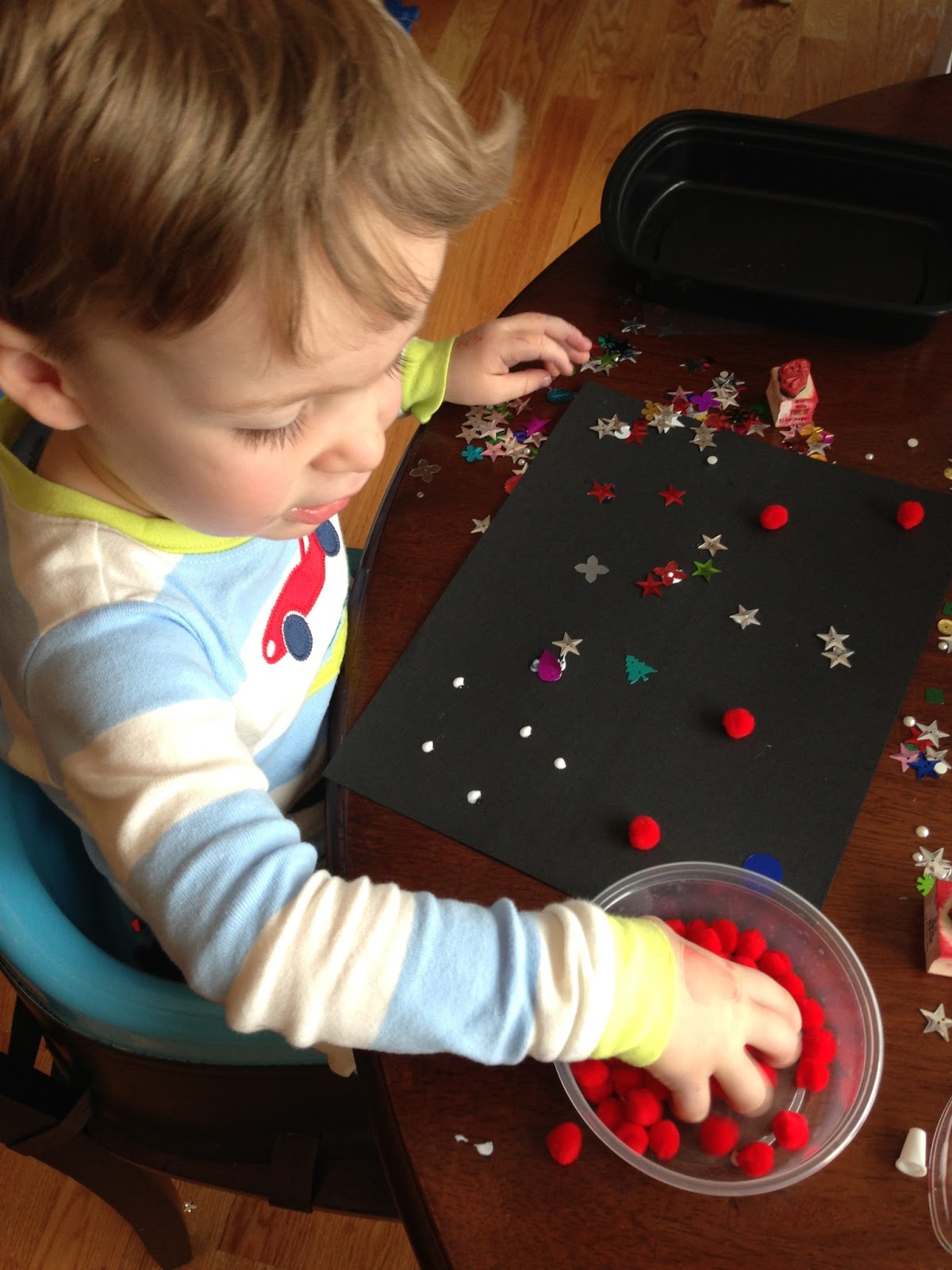
The more I try to incorporate Montessori ideas into my home, the more impressed I am with how much my children are capable of learning and doing, and how happy it makes them to have the power and ability to do things for themselves.

Things take more time, but if I plan for it, I usually have plenty of time.  I would rather do fewer things and let my children participate more fully in each of those things, and that realization has shaped the way we're decorating for Christmas.  We're decorating a little at a time, and enjoying the process even more than the results.

As we decorate for Christmas I try to regularly ask myself, what can my toddler and preschooler help with?

Maybe help is the wrong word, because "help" implies that, well, it's going to be helpful.  Since my children are so young, a better question might be "how can my children participate?"  How can I get them involved, help them feel ownership, give them the pleasure of participating in our holiday traditions?

When I think of it that way, it reminds me that they're not here to help me decorate, I'm here to help them participate.  It's my job as a parent to find ways for them to feel helpful and included.  I'm sowing the seeds for children who will be legitimately helpful, independent, and capable later on.  More importantly, I'm helping them have enormous fun and make beautiful Christmas memories NOW!

Greg and I love doing things with Will and Andrew as a family, and that means finding as many things as we can that little hands can do.  Greg is a natural at this... I often have to think about it.  I'm really happy when I do :)

Luckily, there's a lot!  Here are some examples.  Happy decorating!


What can your little one's hands do?


Wednesday, December 4, 2013

Tip: Use a Coat Rack to Help Young Children Decorate Holiday Wreaths

Not how I would have spaced the ornaments,
but it'll make me smile every time I come home :)
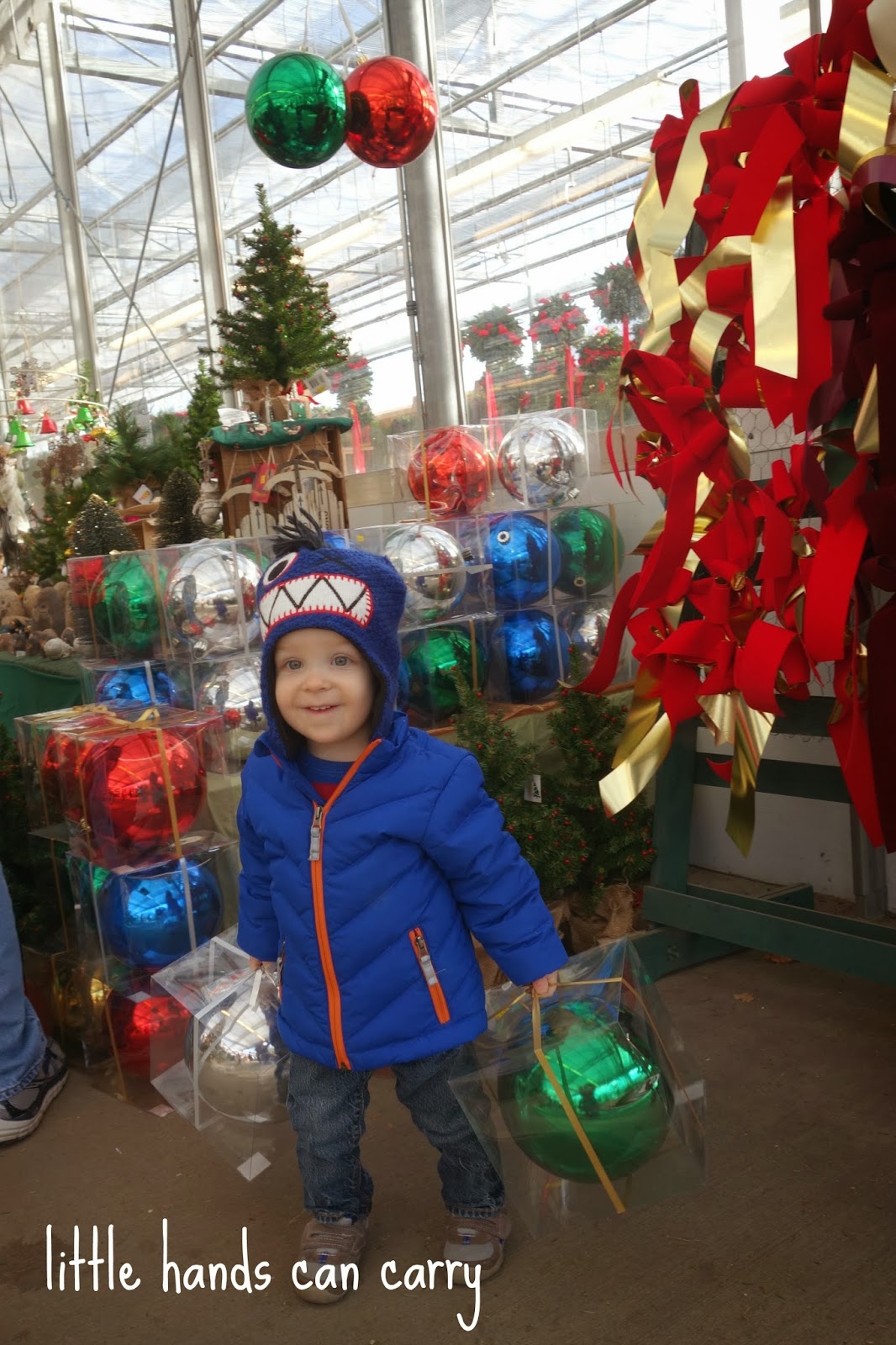
It's December, and since we celebrate the Christmas tradition, that means it's time to decorate!  I love having the kids help, because they have so much fun being involved.

Greg ordered a wreath from the boy scouts, and it recently arrived ready for us to decorate! 

I used a low hanging hook on our coat rack as a stable place to hang the wreath where Will and Andrew could reach it.


I pulled out a small number of decorations, kept it simple, and was sure to supervise while they hung the breakable ornaments on the branches.  They would hook them where they wanted them, and then I made sure each one was secure.

Afterwards, Will eagerly helped to vacuum up all the pine needles while I hung the wreath on the front door.


If you're feeling less brave, or don't have time to clean up a potential mess, you could always use less breakable decorations.  Outgrown mittens on strings make adorable wreath decorations!

I figured that while I had time to supervise them, it would be good to give them the chance to handle delicate decorations.  If one fell and broke, we could talk about how some things are breakable, and what to do if something breaks.  (Stay really still until a grown-up can pick you up so you don't cut your hand or foot, put shoes on before you vacuum, etc.)  I didn't have to have that conversation because they were so careful, but I knew I had time to deal with the mess if it happened, and it's always good to teach kids how to handle breakable things.

Wreaths are such a great thing for kids to decorate, because they're smaller projects than a tree, and with the help of a coat rack they can reach the whole thing! 

He loves helping SO MUCH!

Sunday, November 24, 2013

Two good kitchen tasks for preschoolers

Preparing food is easier when I can do prep tasks ahead of time and include the boys so they're content while I'm working - today for lunch they eagerly took turns brushing dirt off mushrooms, and washing the brussel sprouts.

I was amazed to find that even my 21 month old was able to effectively get dirt off the mushrooms with the brush, then set the mushroom on my cutting board for me and let his brother have a turn.  Color me impressed!


Washing fruits and vegetables is a no-brainer task to let kids do - but I particularly liked brussel sprouts because there were so many individual, sturdy items to wash.

I wish I could tell you they then ate both foods... But that didn't happen.  It was more likely than if they hadn't been involved!


Sunday, November 17, 2013

My kitchen aid dough hook finally has a purpose!


I've always been a fan of kneading my own yeast breads - I enjoy it too much to automate the process.  No bread machine, no dough hook; just old fashioned bread making in our house.

But it's hard to let a one and three year old knead bread.  They need really clean hands, and they lose interest long before the job is done, reducing the "we did it" feeling to a "we helped" feeling.  Still good, but when I use a dough hook, they can add every ingredient to the bowl if I measure them first, turn on the mixer, watch it knead the dough (they watched an entire five minutes... mesmerized!) and even oil the bowl for it to rise in.

Inspired by Will's Montessori preschool, I try hard to let the kids do as much for themselves as possible.  In the day to day rush, it can be hard, and I don't always do as well as I like.

Making bread or cooking with the boys is an exercise for me to work on letting them do everything they can, helping as little as possible.  They carry the ingredients to the counter, wash and dry their own hands, dump everything into the bowl, and help clean up.

It takes A LONG TIME.  That means that for a good hour, they're not making a mess or fighting with each other anywhere else :)

Note: the brandy in the photo was for a fig log I made - not to help me get through the supervision process, I promise :)

Wednesday, October 2, 2013

Idea for embellishing a lunch box


I don't like going to the mall.  I don't like being inside, under fluorescent lights, I don't like driving the busy, divided highway to get there, I don't like using my precious babysitting time to be there, I don't like dragging my complaining kids in the stroller who want to get down, run away, and fondle everything over $100 that they can reach.

So, I kind of put off getting Will a lunch box for his first lunch at school.  He'll be staying at his preschool for a little extra time just one day a week, and having lunch there.  That way, since his normal school time is only 2 hours and 15 minutes, I'll have a chance to get more done with Andrew one day a week.

Only, he needs a lunch box.  And all the other kids are probably going to have SUPER CUTE lunch boxes.  Because what parent doesn't want their adorable little preschooler to have the coolest lunch box ever that will make them smile at lunch time?  No parent.  We all want that.

Except I didn't go to Pottery Barn kids, or Hanna Andersson, or even manage to Amazon Prime one from Skip Hop in time for tomorrow.  I didn't even hit up the local toy store, Magic Beans, that I'm sure has lunch boxes.

Epic.

Fail.


So I did what any parent would do in the eleventh hour, after all the stores have closed, the night before their child's first school lunch ever.  (I may have been in denial, because this seems like a big deal, Will actually eating a meal without me...)

I rummaged around the house.

I found a lunch box of Greg's.  (Sorry, honey.)

I found colored duct tape in the basement.  (Huh?  Ok.  Cool.)

I spent over half an hour making the best darn duct tape train I could, and cut out Will's name in bright letters to label his lunch box.

Is it from Pottery Barn?  No.  Did it cost a lot?  No.  Is it, from an artistic perspective, of any merit whatsoever?  No.

Will he love it?  Probably.  Does it have his name on it in big, bright letters for the teachers to see?  Definitely.  Will any other kid there have the same lunch box?  Hell no.

Love you, Will.  Doing the best I can.

Friday, September 6, 2013

Teaching toddlers to empty the dishwasher


I've been trying to embrace Montessori principles in our house, helping the boys learn to do things for themselves when I can.

This morning, I discovered that they were both very eager to help me empty the dishwasher! Will, almost 3, has helped me in the past.  But this was the first time they both helped together.

Will emptied the glasses one by one, carefully setting them on the counter under the cabinet they go in.


Andrew took utensils out one by one and chucked them into the silverware drawer.  

Yes, I had to rearrange the silverware and put the glasses from the counter into the cabinet... But for the whole time I emptied dishes, it was quiet, they were happy, and each felt like they contributed something.  And you know what?  They did.

I didn't think an 18 month old could help... Makes me wonder what else they can do that would please them and help me!

Sort napkins from clean laundry?

Andrew set the table along with Will?

Teaching them to be part of the household helps all of us!

Tuesday, July 9, 2013

Why I Love Montessori

We're sending Will to a Montessori preschool next year, and I couldn't be more excited.  Since I'd never heard of Montessori before I had children, (despite a master's degree in secondary education... wish I'd had more early childhood development classes!) I thought it might be worth mentioning Montessori here.

Montessori is a style of education that focuses on letting the children be leaders in their own education.  Rather than paraphrasing better articles on what Montessori is, if you're interested in learning more you can check out the Montessori 101 page from Will's school for next year: http://www.thechildrenshouseofwellesley.com/Montessori_Childrens_House_of_Wellesley/Montessori_101.html

Things I love about Montessori:

The choice it gives children to pursue their own interests, which I believe cultivates curiosity by rewarding it, and makes education fun

The guideline for parents to "never do for your children something they could do for themselves" which has inspired me to take the time to help Will learn to do things like assist me with setting the table, clear the table, get his own shoes on, put himself down for his own nap after he has a diaper (with plenty of hugs first of course) and other things that give him a sense of pride and actually make my life easier.

The way that Will is visibly happier when he's included in things like mixing up pancakes (which he then eats more of) or putting together a step stool.  By taking the time to encourage him to learn and try things he's interested in, even when it would take me half the time to do it alone, I've increased his happiness, decreased his tantrums, and gained a little helper around the house.

When I first visited a Montessori open house, I was a little freaked out.  They had counting cubes designed for four year olds, and no toys.  Isn't childhood a time for kids to be kids?  Where are the dress up clothes?  But when I started to really think about the things that interest Will, I realized that he would love a school where he gets to make the applesauce for snack using a food mill, or learn to do laundry, or practice using a real screwdriver or vacuum cleaner.  I have plenty of things for him to play with at home.  Why not send him somewhere where they'll teach him letters if he's interested, and if he's not, he can go pour liquids, or work on different metal hinges, or other practical life skills that toddlers are intently interested in but don't always get access to.

By the time Greg and I left the open house, we were frantic to get our application in the mail.

Even if you don't decide on a Montessori preschool, there are a lot of great ways you can implement some of the Montessori ideas in your own home.  A great book is "How to Raise an Amazing Child the Montessori Way" by Tim Seldin.  Will's preschool recommended it to me, and I've already enjoyed making some changes in our home to make things more accessible for Will and help him do things "all by himself".

There's so much he's capable of doing, if I give him the chance... and it's better for both of us!

Ok they're probably not getting that clean.  But the kids are having a great time!


He loves brushing his teeth now that he has a stool to reach the sink and do it all by himself... hopefully his enthusiasm now will continue!  He can turn the water on, get his toothbrush, put toothpaste on it, and brush his teeth.  

Will can poke the egg yolks with the whisk to break them, whisk the eggs with the oil, then gently stir the dry ingredients in for pancakes.

Friday, July 5, 2013

Face-timing with Mimi

We live two states away from our children's grandparents, and it can be really hard sometimes.  Not only do we not have the support of family nearby, we also miss out on a lot of little moments where the kids are growing and learning and changing and Greg and I are watching it alone.

At the same time, it makes our trips to Maine to see family extra special events that we look forward to and talk about long afterwards.  

We're also lucky to live in a time where technology is an amazing tool for staying connected.  I email my parents, my in-laws, and even my grandparents' and Greg's grandmother photos of the kids on a regular basis.

We call often, and both sets of grandparents have an i-phone so they can Face-time with Will.

I am all about minimizing Will's screen time (he doesn't watch any t.v.) but when Will face-times with Mimi and I listen to them while I make dinner, I realize that this is the opposite of stereotypical screen time where a child is passively entertained.  They talk about their day, Will asks to see things in Mimi's house, and she walks all around and shows him things, pausing for him to process them, and then talks about them.

Will puts the phone places and plays hide and seek with her.  Mimi shows him the collection of plastic beads he likes to play with at her house, and pretends to push them through the phone.  "I got it!" I've heard Will exclaim.  "Can you send the white one, next?"  

Their conversations are filled with creativity and imagination, and real connection.  Whether Mimi is getting a ride on Will's firetruck, or showing him what her pets are doing, I know he's thinking and interacting and working on both his creative and his social skills.  

Here's what Mimi said to me about it recently in an e-mail:

When I FaceTime with Will, I often think of Mr. Rogers and how he would show something and then just let his audience look at it awhile to process it and then ask a question or say something about what he was thinking or feeling.

I try to remember to do this with Will: show all the steps when going to the attic, up the stairs, past Merry, close the door, pull down the stairs, turn on the light . . . Push the beads (imaginative play) through the phone.

You get it.

It can make for better quality screen time, I think, than just a talking head.

In today's tech, we need to practice ways to make things slow down and have more meaning.

Will is so into it that he's taught some of Mimi's tricks to his other grandparents, who now get asked to push things through the phone when they're face-timing with him!

All I know, is that it compensates a little for the hole in my heart that exists when you raise your kids apart from your own family.  It also can make a big difference in my ability to get dinner on the table without any tears.

And whenever we visit Maine, there's no question that Will and Andrew have an extremely close relationship with all their Maine family, despite the distance.  I think the phone calls, the face-times, and the postcards and mail my family sends all help.


Mimi takes Will up the bleachers for his first baseball game on a recent trip to Maine


Will's Nana is a former school teacher - she's got some great tricks up her sleeve too for connecting to kids and teaching them creativity :)  He sure loves spending time with her.

A special trip to my Dad's parents' camp with both sets of grandparents - moments we cherish 


Grampa has a lot more bravery and patience than I do!

Gardening with their great-grandmother on a week long trip to Maine in June


Monday, June 17, 2013

Teaching your toddler not to be afraid of things

I am not a huge fan of spiders or bugs... especially in the house.  But when I see one while the kids are around, I try to remember how much they learn from my example.  I don't want them to be afraid of bugs because I screamed when one caught me by surprise, or take a cavalier attitude towards other living things because they saw me kill one.  So we talk about how bugs live outside, and how neat they are, and count the spider legs once I've caught them in a glass to take outside.  And if we see a bee outside, we talk about how they don't like to be touched so we need to stand back, but also that it's wonderful how they help our flowers grow.

Who ever would have thought I'd be pretending to like spiders.

The things we do for our kids, right?!

I love how this bee is helping our flowers grow.  (I actually really do love bumble bees.)
  

Thursday, June 13, 2013

Putting out new toys for the morning

Recently we've started to keep our toys more organized.  We have them sorted into labeled plastic containers and in cabinets in our kitchen that have child locks on them so that the kids can't get out every single toy they own simultaneously and create chaos.

Lest this sound cruel, they can have any toy any time, as long as they put away something they're not using, first.  We try to keep only a few bins out at a time.  Cars and blocks go great together, or musical instruments and stuffed animals, for example.

This has been great for two reasons:

1. The house doesn't get as messy and the toys stay together so you can actually build an entire shape sorter or put Mr. Potato head together - so many toys are only functional when you have most of their parts!

2. The boys actually engage in more focused and creative play because they're not faced with choosing from all of their toys all at once, all the time.  When they get bored, they find something new to do with the toy that's out, rather than just switching instantly to a new toy.  I've seen my son "cook", plate, and serve the parts to one of his stacking toys for over twenty minutes, which never happened when everything he owned was out all at once.

We took it further recently and started putting something fun out for them to come down to in the morning, maybe a toy they haven't played with in a while, or something set up differently and fun for them.  Greg is best at this, and I think it's fun for everyone :)


Sometimes Greg makes such cute setups for the boys that I wish they wouldn't play with them!

Focused play

Thursday, June 6, 2013

Will's Last Day of Playschool! (& A Thank You Note Idea For Teachers)


It's Will's last day of playschool!

As a fun idea for teacher appreciation thank you notes, I took all the craft projects Will did this year at school and laid them out on the floor and snapped a photo.  I printed the photo and put it on card stock to make a custom thank-you-note for his teachers that is a tribute to all the hard work they did this year helping him create so many fun projects that he is so proud of.  Will wrote on half the inside of the card, and I wrote on the other, and we slipped in a gift card and decorated the outside of the envelope with stickers.

You could even lay the projects out a little more neatly and take a photograph to save if you're planning to keep just a few projects from each school year so you have less clutter in your home.  I figure I'll probably ask Will to pick some favorites to keep.

I can hardly believe his first school year is over.  I feel as though I had just settled into the routine of drop offs and pick-ups, of warm cups of coffee in a quiet house while Andrew napped, of the joy I felt each time Will ran towards me, all grins, excited to show me the day's art project.

When I first looked for a toddler playschool for Will, it was because I needed the break for me.  After seeing him come home singing new songs, super excited about his school projects, and asking every morning if it was a school day, I realized that this was something for HIM.  It meant he had a scheduled time each week where he was guaranteed a chance to play with friends, do a craft project, sing songs, and be active.  I try to do all those things regularly at home, but it's hard sometimes when you've got grocery shopping, meal planning, diaper changing and laundry folding all getting in the way!

Will had a wonderful year at school, with two amazing teachers who were excellent at making him feel safe, comfortable, and happy all while managing to teach him new skills like getting dressed to go outside and doing more and more of each craft project himself.

I'm so grateful, and I look forward to sending Andrew to Miss Hillary when he is two!

Happy end of school year, and welcome, summer!


Will on his first day of school!

Will today.  What a difference a school year makes!


Sunday, May 12, 2013

I Am Mom

I am your nutritionist, meal planner, chef.  Your activities planner, chauffeur, and concierge.  I am your translator, your literacy coach, your walking coach, your moral compass.  I am your laundress, your personal shopper.  I am things there aren't even names for. 

I am your gardener, who helps you push the seeds in the soil and helps you open the pea pods.  I am your first teacher.

I am the one who puts the toys away where you can find them, fluffs your pillow, washes your sheets, and produces a clean lovey in time for nap or bed.

There are things I do that go unnoticed and unasked for.  I do them anyway, because they make your life better.

I am never really on vacation.

I know your favorite food, your favorite color, your favorite animal, and your favorite book.  I know they might be different as soon as tomorrow.  Ask me tomorrow and I'll still know.

I operate 28 buckles every time I make a grocery trip.  I can get perishable groceries into the fridge, diapers changed, and lunch on the table in less than fifteen minutes.

I am the luckiest, and the happiest, my days are filled with joy.  I am doing the most important thing in the world.  I am the most exhausted, stressed out, and overworked... and I can never quit. 

My patience is not unlimited.  You think it is.  I do my best to find time to be me, so I can be your everything.

I drink a lot of coffee.

I teach you caution instead of fear, and I keep you safe until you've learned to do it yourself.

I put your sweater on before you shiver.  I get out of bed to give you a drink of water when you call for me. 

I am the embrace that makes your tears subside.  I am the audience for your achievements.

I capture your life in photographs and written memories, and live it with you every day.

Before you were born, I was your world.  Now you are mine.

I will always love you, forever and ever and ever.

I Am Mom.


To all Mothers - For all the ways that you are Mom - Happy Mother's Day.

Thursday, April 11, 2013

Lecture Review: Working with Temperament, Debbie Weinstock-Savoy, Ph.D.

You're watching HGTV, and they're doing a backyard show.  A beaver, monkey, dolphin, and owl are standing on an empty lot discussing landscaping ideas.

Dolphin: This will be great!  We can have a gazebo, the neighbors can come over, maybe we can do a color theme for the flowers, focus on blues and purples....

Beaver: You'll need to plan the flowering plants so you have blooms in each season, and we should probably check the soil types before you consider planting anything, I'll make a list and draw up some diagrams...

Monkey: This is awesome, I can't wait to get started!  I'm going to go check out the gardening store, look at the plants, maybe pick out a couple to start with!  And I'll try out some of the furniture while I'm over there!

Owl: Are there any charts around here that show which plants grow the best in New England conditions?  What's the overall idea here, are you trying to have an outdoor dining space or a garden area or what?  

Ok, so maybe this is unrealistic, being that owls are nocturnal and the rest of these animals don't share a natural habitat.  What I'm really talking about is temperament.

Will sat quietly in his booster seat and made cards and crafted for over half an hour... Beaver?

One of the benefits of the local mother's group I'm part of is a great lecture series on parenting topics, the most recent of which was Debbie Weinstock-Savoy speaking about children's temperaments and how understanding our children's predispositions can help us as parents.

The lecture took the popular Myers Brigg's personality test, which identifies people's natural tendencies in four different areas, and created four groupings that can help us understand how people learn and interact.

You can read about Myer's Briggs at http://www.myersbriggs.org/my-mbti-personality-type/mbti-basics/

If you're familiar with Myers Briggs, here's a brief review of the four identifiers:

At the end of a long day, how do you get your energy back? 
Introvert (re-energizes by being alone) vs. Extrovert (re-energizes by being around people)

How do you prefer receiving information?
Sensing (hands on, detail oriented) or Intuiting (observation, big picture, ideas and theories)

How do you make decisions?
Thinking (the facts, objective) or Feeling (relationships, how a decision affects people around you)

Do you prefer schedules and structure or new experiences and spontaneity?
Judging (structure and closure) or Perceiving (new experiences, spontaneous)

The four categories Debbie Weinstock-Savoy discussed:

Based on David Kiersey's categories, Dr. Savoy talked about four personality categories.

Two types of "sensors" who prefer things hands on and are detail oriented rather than abstract or big picture:

Beaver (SJ): The beaver is a detail oriented, sensory learner who prefers structure and closure over new experiences and spontaneity.  They make lists, they focus on tasks, they don't like it when people break the rules, they like plans.  They're so driven to accomplish things that they may need to make it a specific point to have fun.  (This is the Kiersey "Guardian")

Monkey (SP): The monkey is a hands on, sensory learner who loves new experiences and spontaneity and fun.  They're high energy, they love things to be new and exciting, and they are not necessarily well served by a classroom environment.  They'd rather do than memorize, and they can get bored without enough variety and excitement. They'd rather jump into a project and start playing around with materials than sit and plan.  Their work better be fun, or they're not doing it.  (This is the Kiersey "Artisan")

Two types of "Intuiters" who are big picture thinkers who learn from observations and ideas:

Dolphin (NF):  Creative, big picture thinkers who make decisions based on relationships and the impact something will have on those around them.  Relationships are really important to them, they're often idealistic and thinking about the potential of any situation, and they're naturally empathetic. (This is the Kiersey "Idealist")

Owl (NT): Observant, big picture thinkers who make decisions based on objective facts rather than relationships.  They're independent minded, love ideas and a good debate, sometimes have trouble relating to people because they prioritize facts over relationships and can be irritated by people who don't understand their point of view. (This is the Kiersey "Rational")


My experience:

Having taken the Myers Briggs test, I know that I'm halfway between a Beaver and an Owl (I test borderline in the receipt of information category, being halfway between preferring details and preferring patterns and ideas, with a slight preference into the Owl or big picture category). 

Looking at the strengths and vulnerabilities of those personalities makes me laugh, because they're right on with my own experiences.  I get nervous and upset when rules are broken.  I like structure and plans, and am not great at being spontaneous.  I love feeling productive and am task oriented and focused.  All Beaver qualities.  I make decisions based on objective facts like an Owl - even in raising my own children, I love to have research backed information based on a firm foundation of childhood psychology before I go ahead with my gut instinct anyway.  When we were looking for a family car for me to drive, I read consumer report after consumer report, made a decision, and was irritated when Greg wanted me to test drive something else, because darn it, I had the facts and I'd already made my decision.  This might sound insane to you, unless you're also an Owl, but it's very true to my personality type.

How I find this most helpful:

Even if you haven't taken the Myers Briggs, if you do some reading about temperament and personality types, you probably have some good guesses about how you or your child likes to learn and how you make your decisions.  Looking at these "types" is a great way to do some self-reflection about your own strengths and weaknesses, and how you can work with those to better interact with the world. 

As a Beaver/Owl combination, I tend to stick to the rules, be very objective and fact oriented, and make decisions based on truth or research.  This meant that when I was an RA in college, I was a great resource for my students when it came to details like scheduling, navigating the campus, and learning about University resources.  It also meant that for every rule violation, I looked up the policy and implemented it rather than thinking about relationships and what would best benefit my residents and our relationship.  My Owl side thought that teaching high school history would be fun, because I love nothing more than sitting around discussing ideas and talking about history.  Too bad that's not what teaching is about... maybe I should leave it to the Dolphins!

I know I need plans and get upset when plans change, that's helpful for me to know and for my family to know.  I know that I tend to make decisions based on objective facts rather than always thinking of how those decisions affect people, that's a good thing for me to be aware of so I can compensate for it.  I know that I will fold laundry and clean closets until I'm blue in the face unless I make myself stop and sit down for some "me" time.

Looking at personality types can be a fun conversation to have with your spouse, so you can have a good laugh about how when you decide to landscape the yard, you have all these ideas and a big vision of how it'll look, while they're entirely focused on soil types and exactly what needs to happen to get it done. 

As a friend:

One of my best friends growing up is a CLASSIC monkey, I mean, so stereotypical Monkey that it makes me laugh thinking about it.  I loved spending time with her, she always had the best ideas for how to have fun.  We would make pancakes with weird ingredients, have awesome adventures, make the coolest crafts I never would have thought of, she was fantastic.  She was always up for a good time and was somehow so much more fun than I was that I was always kind of amazed she was willing to hang out with me. 

That being said, we could NOT work on school projects together - I needed to have a plan, she wanted to dive right in.  I wanted to know exactly what our purpose was and the end result would look like before we started, she thought that was impossible because the process is the most important part of learning and if you know the end result before you start, you're not learning because you learn from doing it.  Owl vs. Monkey... not great compatibility on a school project!  But boy was she the best friend a girl could have.

As a parent:

It's way too early to tell with Andrew (14 months old) but I am wondering if Will might be a beaver.  He's very focused, very hands on (of course he's a toddler, and most of them want to hold and touch whatever you've got), and will sit for ages and work on crafts.  He definitely likes his routines and to know what's happening, I try to tell him every day when he comes down for breakfast what our plans are and what we're doing.

I think it's always good to be thinking about your child's preferences, whether or not it's within this framework, and trying to make things easier for them.  You don't have to do a Myers Briggs test for your five year old to know that they love hands on stuff and are super energetic and wish they could play outside all day (monkey?).  Or maybe they're incredibly imaginative, make up lots of stories, and are very sensitive to whether their teacher likes them and how many friends they have (dolphin?).  You know your kid - this is just a great way to get the conversations started, and help us think about what comes naturally or hard to us and our kids and how we can better compensate for it.

Some parenting examples Dr. Savoy gave during the lecture:

A mother of a dolphin altered their bedtime routine to include coming up with a dream that the mother and daughter would meet in while they were asleep.  This appealed greatly to the dolphin's very creative and imaginative side, as well as their emphasis on relationships.

An extroverted mother of an introvert got a notebook that her daughter could write in when she wanted to tell her mother something, and the mother would write back, so that the daughter had the processing time and alone time an introvert needs but could still communicate with and have a great relationship with her mother.

Parents of monkeys may want to think about how they can provide plenty of time for exuberant play in outdoor spaces or places where there are lots of fun materials to play with.  Turn work into play, make things fun, mix things up a lot.

If you have an owl child who is an independent thinker and doesn't do something unless they understand the reason for it, explain why sometimes going with the flow will benefit them - one parent had a child who was frustrated that their teacher wanted them to use punctuation when CLEARLY the ideas in the paper were the important part and all that should be graded.  (This sounds like me freshman year when I decided which homework assignments I thought were worth doing and only did those.)  The parents explained that since it was clearly too important to the teacher, maybe it'd be better to use the punctuation so that the teacher could focus on these important ideas the child had.

If you have a beaver child, give them a heads up of what you're planning for the day and if you think there's a chance plans might change, maybe let them know that, too.  "We're going to the park this afternoon to meet with your friends, but if it rains, we might have to go to the library instead."

Some resources Dr. Savoy suggested:

http://www.temperament.com

http://www.preventiveoz.org

http://www.personalitypage.com

Raising Your Spirited Child by Mary Sheedy Kurcinka

Nurture by Nature: Understand Your Child's Personality Type and Become A Better Parent by Paul Tieger & Barbara Barron-Tieger


It looks as though Dr. Savoy is in the process of building her own website at http://parentingwithstyle.com/

She is part of the Massachusetts School of Professional Psychology: http://www.mspp.edu/ce

Probably a beaver.

Saturday, March 9, 2013

Back from St. Martin! - Vacationing with a baby & toddler

My parents heading out for a sail!
We did it!  We packed everything from swim diapers to paperback story books for the plane and we hauled all our stuff, a one year old, and a two and a half year old through airports and planes and car rentals and island traffic to the French side of St. Martin in the Caribbean.

Ok, so we cheated.  REALLY cheated.  We had two sets of grandparents with us to help entertain children on the plane, haul stuff from place to place, and help out while we were there so we could have some dinners to ourselves and time to relax on the beach.  They are awesome and it was awesome.

That said, here are some of the tips I read that helped me the most, and that might be more helpful for traveling parents of small children than "grandparents!"


1. Have a convenient way to secure and transport each child.  We brought just one stroller for the two kids, but also had the ergo baby carrier with us.  That meant that when the two year old was tired, or we were dealing with ticket counters and couldn't risk him running off, we could put him in the stroller and the one year old in the backpack carrier.  Then when we were through security with time to kill, he could walk around while our backs got a break because we moved the baby to the stroller.  The ergo is great because it's hands free, didn't bother my back even when I carried Andrew for over an hour in it, and folded up small enough to tuck into a backpack or bottom of the stroller.  We've even used the ergo with Will when he was almost two to carry him from place to place on our vacation in Cape Cod - in a pinch, it beats carrying a toddler and not having your hands free for luggage or risking them running off while you're handling suitcases.

2. The travel experience and interacting with you are a great source of entertainment.  Everyone recommends an activity bag with some new books and toys for the plane.  Absolutely a great idea - but also remember not to pack too much because you've got to lug it, and honestly, most of the time Will was more entertained by looking around, asking questions about the plane, talking to us about everything he saw in the airport, and looking through the in-flight safety information. Snacks are also great time killers and mood-boosters, but think about whether you need to bring more than a few or if you can buy them as you travel to save weight and space.  Jet Blue offers great snack boxes with lots of variety including one aimed directly at kids complete with raisins and squeezy applesauce pouches.


3. They sense your mood.  If you're feeling impatient, they sense it.  If you try to enjoy every aspect of the trip "Ooh, now we're waiting for the rental car... we're so close to the airport we can see the planes going by!  What kind of a tree is that?  Let's look at the leaves while we wait!" then your kids will take your lead.  Also, I actually enjoyed traveling more because it really was an adventure each step of the way.  Did you know that a lot of airports have little plane motifs on their floor tiles?  Yeah.  I didn't.  They do.  If you have time, you can count them pretty high.

4. Avoid the trifecta. When you're traveling, you might have to skip a nap, or wait longer than normal for lunch, or get a little too hot or cold as you switch climates.  One is ok.  Two might be ok briefly... but don't let your kids get tired and hungry and hot or cold.  I found that by making sure I was thinking ahead about their food intake and what they were wearing, that those were the easiest to control even when they might be too excited to sleep on the plane.  If you're ordering food at a restaurant, don't wait until the kids are ravenous to find a place and order, careful planning and leaving really early for lunches and dinners can make a big difference.

5. This is not your honeymoon.  Have realistic expectations!  Oh, and bring the grandparents so you can go out to a nice dinner ;)

Los Calmos Cafe


Thursday, November 8, 2012

The Terrific 2s! Figuring out when to say "no". (NO! No.. WILL! No!!!)

It's hard to say "no" to this guy!

Will is in his terrific 2s!  He's mobile AND he's verbal, and that means he's getting into more things and asking for more things than ever before.  Having a toddler who can tell us what he wants sometimes saves a lot of frustration, but it also means we've had to do a lot of thinking about when to say "yes" and when to say "no".

Some cases are pretty cut and dry.  No, you may not sit on Andrew.  I feel pretty confident about this decision.  Others have Greg and I scratching our heads in disagreement, because while our parenting philosophy lines up, our interpretation of which category a particular situation falls into might not.  He's in distress!  I need to comfort him!  He's throwing a tantrum because he wants your attention and you're giving in!  AHHHH!!!!

Suffice to say, I've been doing a lot of thinking (and reading, and thinking) about this, and thought it'd be helpful for me to organize my thoughts on when to say "No."


What am I trying to teach him?

Often when I say "yes" or "no" my decision is influenced by what I'm trying to teach Will about how he should behave and how the world (or at least our family) works.

Things I do want to teach Will: 

  • I am on your side, and if you want something that's reasonable and I can help you get it, I will.  Crying because you've misplaced a favorite toy? I'll help you find it.  You're screaming in frustration because I've got your sneakers and you want to wear your rain boots outside but it's not raining?  You know what, OK, but you can't wear your sneakers when it's wet out.
  • Our family is consistent and fair.  We treat each other with respect.  We're not going to let you repeatedly slam the doors to your toy kitchen or scream at the dinner table, it's too loud for the rest of us.  I will listen to what you want, and if I say no, it's for a good reason.  
  • Sometimes we're disappointed, but we can recover and still have a good day.  Unless we're out of coffee.  
  • If there's conflict, the needs of the family outweigh the needs of the individual.  You want to stay and play with your train set, but we need to go get groceries so we can eat dinner.  I'll give you a five minute warning, but we're going to the grocery store!   Yes, sometimes I let you use your learning tower at the counter when I prepare lunch, but we're running behind today, and I really can't, I'm sorry but no.
  • You may not do things that are dangerous to yourself or others, or destructive.  


Things I do not want to teach Will:

  • If you scream long enough, I will probably give you what you want.  I may comfort you, and give you hugs, and tell you I still love you, but you will not be getting Halloween candy for dinner, playing with the stove knobs, or opening that toy package in the store.
  • Sometimes I will say "no" just  to teach you to live with not getting your way or because I have more power than you.  This can be tough, I think there's a tendency to worry that if a toddler is screaming, and you then give them what they want, you're teaching them to scream whenever they want something.  I believe that toddlers scream in frustration as a means of communication as well as a means of protest, and if they're communicating that they want something and you haven't responded yet, it's OK to say yes and help them.  If they're screaming after you've said no clearly, then they're protesting and  my strategy is to comfort him if he's receptive, and give him some space and wait it out if he's not.  Otherwise, you're stuck trying to respond to toddler requests in the nano-second before they start fussing, or you're pigeon-holed into saying no.  Sometimes I tell Will I need to think for a second, and then I say "OK, that's all right" or "No, that doesn't work".  Of course, I've also read that if you never, ever change your mind once you say no, they learn to be stubborn and closed-minded.  I've decided that's a nuance for parents of t'weens and teens, NOT toddlers.


Some Pitfalls


  • The fear of saying "yes" because it's the "easy" way.  Sometimes I think as parents we feel pressure to say "no" and be stuck listening to our kids complain because we worry that otherwise we're taking "the easy way" out and spoiling our kids.  Parenting is hard, and sometimes what's "easy" and keeps the kids quiet in the moment really IS the wrong decision.  But not always!  Toddlers live in a world of frustration, they get upset and genuinely need our help often.  Yes, he's going to be quiet and stop complaining if I give him what he wants right now, but if what he wants is something that's easy for me to do, doesn't hurt himself or others or inconvenience the family, then is that necessarily wrong or overly permissive?  I think there are PLENTY of opportunities in a given day for me to say "no" and for Will to learn to live with the disappointment.  I like to save "no" for when I need it, and my hope is that Will actually respects my "no" answers more because I'm willing to say "yes" so often.  
  • How much consistency is there between caretakers? My husband and I agree freakishly often, but even we don't always agree, and often we don't find out until after the fact that we're doing things differently.  "You let him turn the lights on and off as much as he wants before bedtime?  I only let him do it once!"  (Turns out, there are quite a few little differences in our bedtime routine.  Structure's the same, details are different.)  And grandparents?  It's a time honored tradition for grandparents to reserve the word "no" for extreme cases when safety is at risk.  "Cookie?  Nana cookie?"  "Sea glass?  Mimi does?"  Umm, no, you can't have Nana cookies for breakfast and you can't carry Mimi's sea glass around the kitchen and leave it for Andrew to choke on.  At first I did some worrying that Will might get confused about the rules.  Then I realized that Will has learned to have different expectations of his caregivers, and that's OK.  He knows that Mimi will drop everything and let him lead her around by the hand to play with his toys.  He knows Mom can't always do that.  He knows both his Grampas will pick him up and carry him around whenever he asks.  He knows Dad can't always do that.  He has different relationships with and expectations of us, and as long as the big rules remain the same (you eat in your high chair, you sleep in your crib after you read your stories) it usually works out.


Book Recommendation


My Uncle John, who introduced me to the term "terrific 2s" and who is one of my parenting role models, gave Will a great book for Christmas last year called "No, David!" by David Shannon.  It's a really funny picture book of a young child doing lots of things that make his parents yell "No!", but that ends with "Yes, David, we love you."  Such a great message and a fun book to read with toddlers who are dealing with their own frustration of having to hear "No" more often than they'd like!  There's even a Christmas version.

A Closing Thought

This blog post was partially inspired by a friend of mine posting about a rough morning she had when she and her husband disagreed on whether to say no to their toddler, and there were tears, and she had that horrible gut-wrenching "Am I scarring my child for LIFE?!" moment.  (I've so had those moments.)

Luckily for us, our kids' behavior and happiness is the SUM of all the parenting decisions we make, not the result of any individual one.  I'm going to keep trying my best to make thoughtful parenting decisions, to make my kids feel lovable and loved, and to let go of some of my fears that I'm making mistakes along the way.

And when Will screams "NO, Mommy, NO!!!" when I reach for his train set, I'm probably going to laugh.  Then I'll put the train down.  I can show by example that it's nice to respect other people's things.  I'll let Andrew teach him how to share.  ;)

Monday, July 16, 2012

Book Review: 1,2, 3 The Toddler Years

I recently went to my local library and picked up a copy of 1,2,3 The Toddler Years, A Practical Guide for Parents & Caregivers by Irene Van der Zande with Santa Cruz Toddler Care Center Staff.

I loved it - this is one of the most parent-friendly and accessible toddler behavior guides I've read.  The sections are brief, to the point, and full of real-life examples to help parents understand how to implement the book's advice.

The book has been around for over twenty five years and is still in print.  It's based on a philosophy of respect for toddlers that's been implemented and studied at the Santa Cruz Toddler Care Center.  I found it chock-full of common sense strategies for boosting my toddler's daily happiness and reducing tantrums.

Here are some of the chapter headings so you can get a sense of the book's content: Let Me Choose, Plan Ahead... It Helps, MINE!, Biting, Tantrums, Wait Til I'm Ready (Toilet Learning), Stop Feeling Guilty.

So much of the advice mirrors what I've read in other parenting guides, but here it is in very small, to the point chapters (there are chapters that are less than five pages!) that are as easy and quick to read as they are implement in your daily routines.

Some small things I'm doing differently after reading this book: 

Remembering to offer Will choices regularly, but ones I can live with.  "Orange shirt or blue shirt?", NOT "What would you like to wear today?" (Nothing isn't an option.)

Reserving some time each day to play with Will doing whatever he wants.  Even if that means sitting for fifteen minutes while he happily chugs a train back and forth and makes "ding ding ding ding" railroad crossing noises.  My usual tendency was always to run off and unload the dishwasher or switch the laundry every time he was happy, and I was missing out on some wonderful moments with my toddler.  I've also noticed that if I invest time paying attention to him in the morning, the rest of the day goes better even if I have a lot I need to do.

Being very careful about what I say in front of my toddler, and I don't just mean my vocabulary.  Children understand far more than we realize, much more than they communicate back to us.  If I'm complaining about my day, Will's listening, and learning.

Letting Will experience negative emotions without trying to distract him.  How many times have I said "Ohh, no, don't cry!" to my upset toddler after he's fallen, or when he's frustrated because he can't play with my iphone.  But this can send Will the message that it's not good to be upset or to cry.  Now I try to mirror what he's feeling with language "oh, you bumped your head and now you're crying, that stinks, it must hurt" and then ask him if he wants a hug, and just be close to him until he feels better.  (Harvey Karp's "Happiest Toddler on the Block" DVD and book deal specifically with how to react to tantrums and help toddlers with frustration and negative feelings, and I think he'd agree with this approach.)

Giving Will a heads up before transitions.  Imagine how frustrating it would be if you were in the middle of something, and someone grabbed you and put you in the car without even giving you a heads up or a chance to wrap up your activity.  I do this to Will all the time!  No wonder transitions are hard for kids; they don't know they're coming, and they're happily engrossed in the task at hand.  Now I try to give Will a heads up that we're going to go back inside soon and have snack, so let's push on the swing two more times, or we have to say goodbye to your friends soon, is there a toy you want to play with before we go?  He understands more than he always lets on, and giving him the heads up that we're finishing soon and telling him what we're doing next really do make the day go smoother.

Bottom Line:
I would recommend this book to any parents of toddlers.  It's so short and easy to read that it's a great option for parents or caregivers who aren't really into reading parenting books but could use some tips for caring for their toddlers.  (And seriously, who couldn't use some tips for keeping toddlers happy!)  I found it at my local library, but you can get a paperback copy for under $10, and it won't take more than a few minutes of flipping through it in the bookstore for you to tell if it's something you think you'd find helpful.

You can't just give them a cookie whenever they're upset.  (But don't I wish!)

Tuesday, May 15, 2012

Lecture Review: Dr. Alan Kazdin "Effective Parenting: Help with Discipline and Child Rearing"

Discipline.  Now that I have a toddler, it's the new Sleep.  The word on the street, if you will.

How do we teach our children how to behave?  It's a big question, and it takes up a lot of space on the parenting bookshelves.  We recently attended a lecture given by our local Mother's forum where Dr. Alan Kazdin, the director of the Yale Parenting Center and Child Conduct Clinic, spoke about his recommendations for shaping child behavior.

Here's what I took away.

According to research studies, the best way to shape a child's behavior is to praise positive behavior in the right way so that the child wants to repeat it.

This can be challenging, because when we talk about teaching children to behave, we frequently focus on what we DON'T want them to do, rather than what we want them to do.  How can I keep Will from throwing food on the floor?  How can I get him to stop trying to poke Andrew in the eye?  Should I say no more firmly?  Try time outs? 

Kazdin would say I need to find the "positive opposite" of the negative behavior I'm trying to eliminate, then work to encourage it.  For example, I don't want Will to throw food on the floor.  I do want Will to keep his food on his tray, and hand me food he doesn't want in front of him or tell me he's all done when he is finished instead of systematically throwing things against the wall.  

Since I do want Will to keep his food on his tray, when he's eating his food and keeping it on his tray, I need to praise him for that behavior, but in the right way.  It needs to be immediate, either while it's happening or directly afterwards, it needs to be specific "Great job keeping the food on your tray while you eat it, that's wonderful!", it needs to be appropriately enthusiastic for the child's age, and it helps if you make light contact with the child, putting your hand on their arm, or back or giving them a hug.  

Praise pitfalls: Don't praise the child instead of the action - he's not a "good boy" because he kept food on his tray, he's a good boy because he's your son and you love him.  The action was good, comment on it specifically.  Don't mix your own feelings and emotions in as incentive - "Mommy is happy when you don't throw food on the floor."  Research shows that is less helpful than just praising the action without complicating the issue.

Finding the positive opposite of the behavior you want to discourage can be tough, and so can be finding your child modeling that behavior in order to praise it.  But over time, research has demonstrated that this is the best way of getting your child to behave differently.  "No" stops behavior in the short term, but won't reduce the frequency of the behavior in the future.  I still plan to tell Will "No" when I need him to stop something immediately, but after listening to Dr. Kazdin's compelling lecture, I no longer expect that magically on "No" number 518, Will's going to understand and stop throwing food on the floor.  I need him to want to keep his food on the tray because it feels good to get praise when he does.  (And no, this shouldn't lead to a day filled with praise for every little thing your child does right, after the behavior disappears, it usually stays gone without the need for regular praise to keep it gone.  Says research.  And you know I love research.)

Something interesting things we learned at the lecture:

It's not about understanding.  It's fine to explain to a child why they should not do something, but them understanding they shouldn't do it will not necessarily discourage that behavior.  I think every parent has seen their wonderful, adorable toddler look at them with a gleam in their eye right before they do something forbidden, even waiting so the parent can catch them doing it.  They know.  That's not the problem.  The problem is they require motivation to do differently.  We need to make them excited for the praise they'll get doing something right, rather than the attention they get when they do something wrong.

Punishment is not very effective at changing behavior, and often has negative consequences.


What if you can't find your child doing the "positive opposite"?

I want Will to stop poking Andrew in the eye.  Positive opposite: I want Will to be gentle with Andrew in their interactions.  So I need to praise Will when he's patting Andrew's head gently or making faces at him without throwing blocks at his head.  If those moments are far between, Kazdin would recommend that I play a game and set up a scenario where Will practices being gentle and I praise him.  I'd really recommend reading Kazdin's book for more information on shaping behavior in specific situations.  It's called "The Kazdin Method for Parenting the Defiant Child", a title he apparently fought the publishers hard over for several reasons, and it has a lot of guidance on working to eliminate troublesome behaviors common for different age groups.  (Everything from homework refusal and supermarket scenes to swearing.)

This can be time consuming when you have a problem like keeping your toddler away from the hot stove, because it might require coming up with a game where you open the stove door when it's not hot, and praise your child for staying away from it.  "I bet you can't remember to back away when I open the stove door!  Bet you can't get far enough away!"  Blech.  I just want to make my biscuits.  It might be best for me to focus on one challenging behavior at a time with this positive opposite approach.  (But it would be seriously awesome if Will thought it was funny to run in the other direction when I opened the oven door.)

My thoughts on all this:

Will it fix your toddler, pre-adolescent, or spouse's behavior problems quickly and irreversibly?  Who are we kidding.  It takes time and patience, and it's not fool proof, but it makes good sense, is backed by research, and is easy enough to do.  Plus, I can't imagine that praising your child in a specific way for modeling a positive behavior is going to do harm.  

This is something I can do and feel good doing.  I love setting my toddler up to succeed and praising him when he does.  That feels a lot better than the idea of time outs, or perfecting my "mommy glare".  This is up there with child proofing my home and using distractions and redirection to shape my toddler's behavior instead of having to say "No" all the time.  

Discipline is a word that makes me feel nervous, there's some negative, punitive association with that word.  I like to think instead about Education.  My job as a parent is to parent myself out of a job.  My job is to teach my child how to behave and encourage him to behave in the right way.  I like any strategies that help me do that in a way that is comfortable for me as a parent, and this is one of them.

I read a lot of parenting books, in part because I enjoy it, and in part because I don't feel you need to be loyal to one set of advice, but that you can often just learn something useful to add to your parenting toolbox.  If this sounds inconsistent, let me try to explain.

In the course of the day, I expect I will try many different recommended ways of shaping Will's behavior.  When he approaches the stove I will say "No" firmly and explain that it's hot.  I will redirect him to his plastic shovel when he grabs my metal one when we're planting.  I will foster a loving connection with him and hope that his desire to please me will positively influence his actions.  I will tell him he's doing a wonderful job patting kitty gently when he rubs her fur instead of pulling her tail.  I can cite a different book recommending each of these strategies, and I think all of them have a place in my parental toolbox as I help Will learn how to behave, and get him to want to behave that way.

I think Dr. Kazdin's advice will work best for me if I focus on one or two behaviors at a time, so I can consistently look for and praise positive opposites for those behaviors.  I've been implementing Dr. Kazdin's advice and praising Will for not throwing food and dishes on the floor with some noticeable success: dinner is hit or miss (either he hits me with the food or misses and hits the floor), but when he eats his cereal at breakfast, nothing gets thrown.  And when he's done, he stacks his two bowls (one for milk, one for cereal, he gets to do the mixing) puts his metal spoon in them, and lifts them up to me with the words "All done!"  It almost makes up for getting fork-fulls of salmon hucked at me during the witching hour.  Almost.  


Why say no...
When you can redirect?